
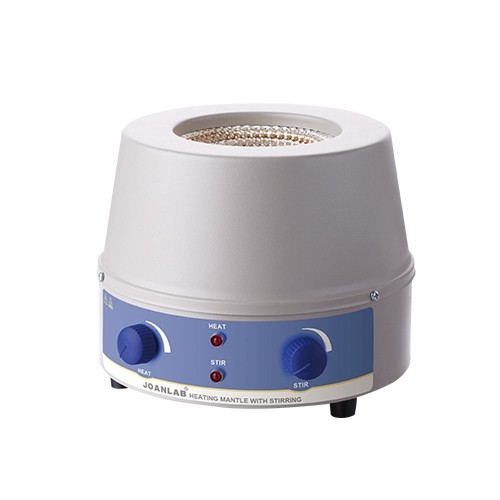
 With or without stirring
Heating mantles
JOANLAB heating mantle · HM series
HM · HMC · HMS · HMSC
- Capacity
- 50 mL - 20 L
- Max. temp.
- 300-380 °C depending on the series
7 families of laboratory heating equipment from JOANLAB: heating mantles, thermostatic water baths, dry baths, and glassware dryers. Models, configuration and availability are confirmed in the quote.
7 product families
With or without stirring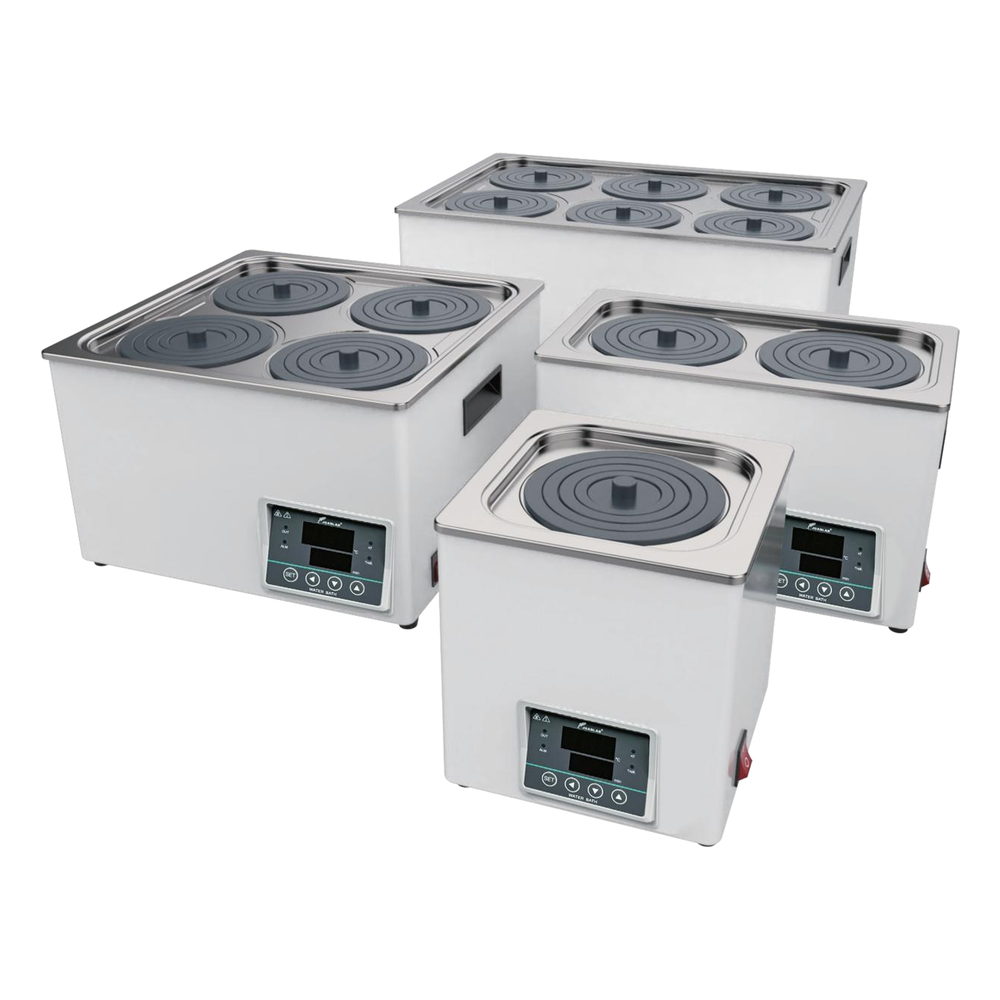 F version: dry-run protection
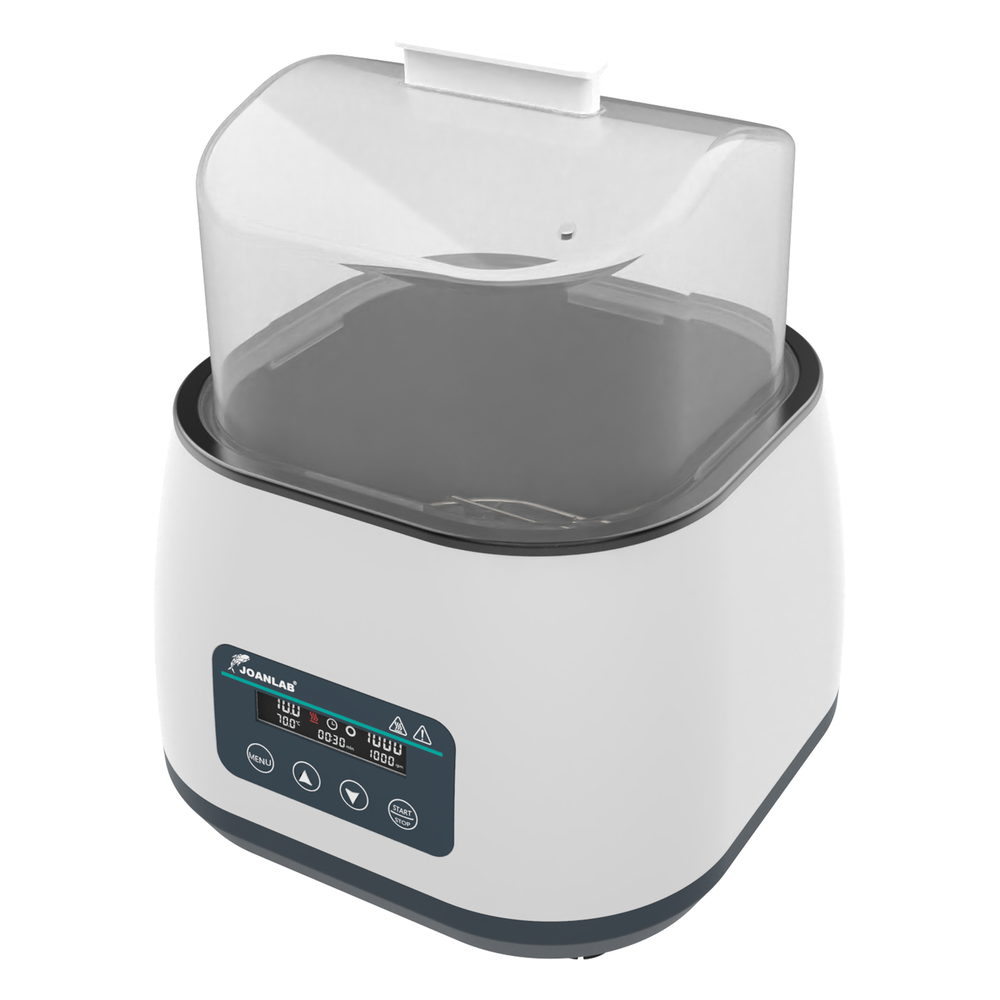 2 and 6 L, with or without stirring
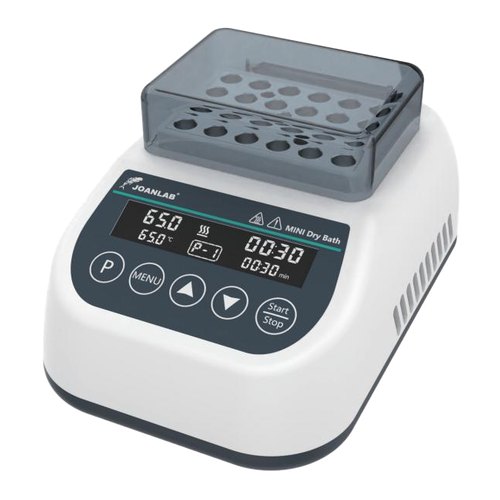 Four blocks, up to 40 tubes
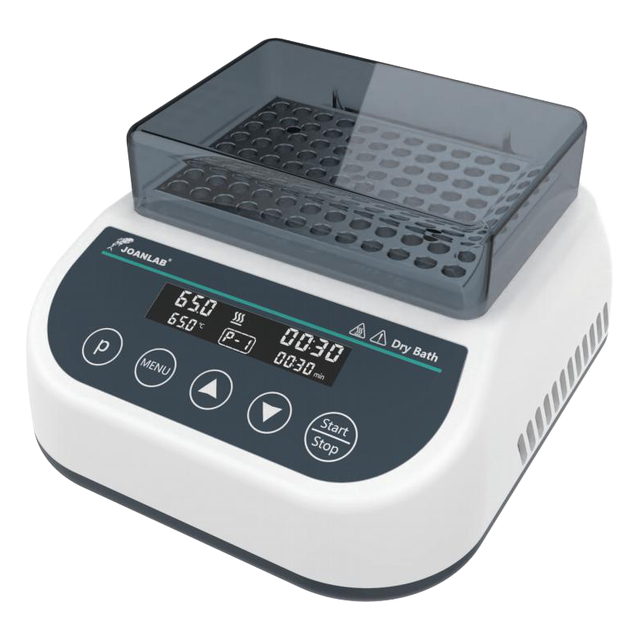 Nine interchangeable blocks
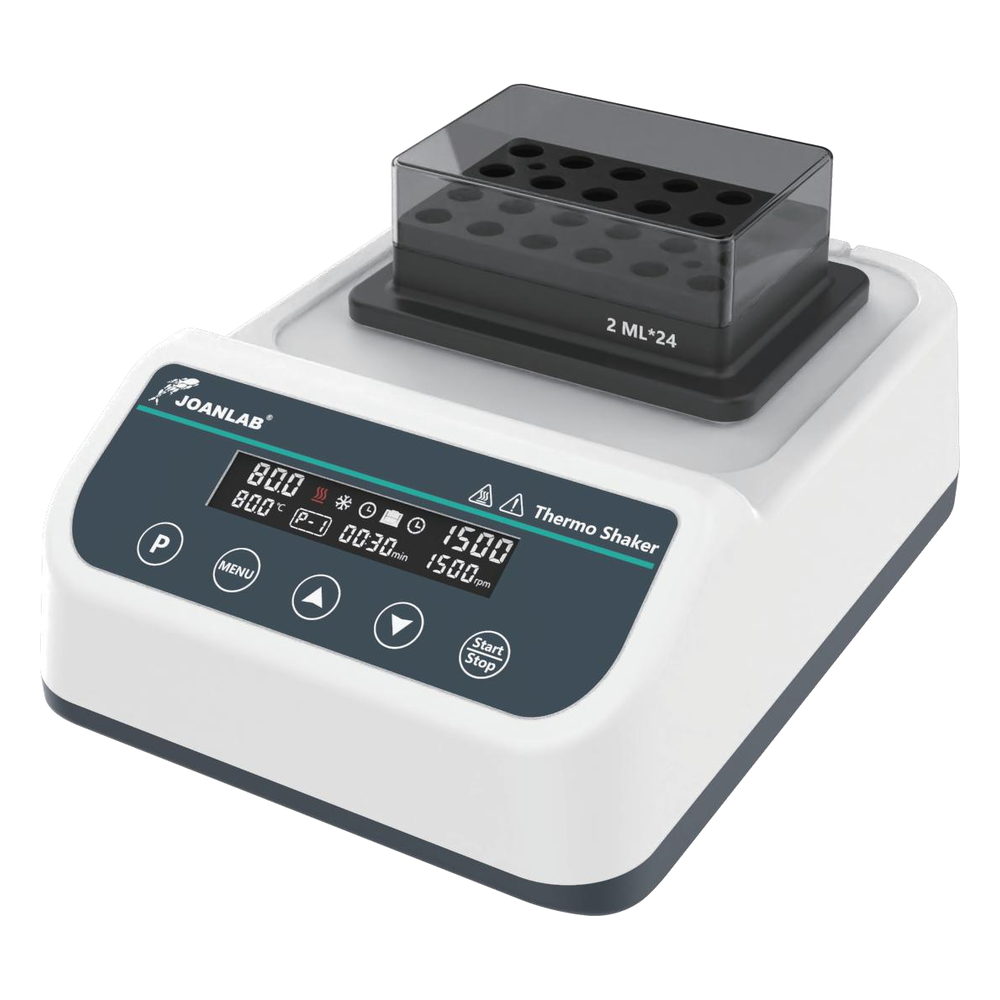 With or without shaking
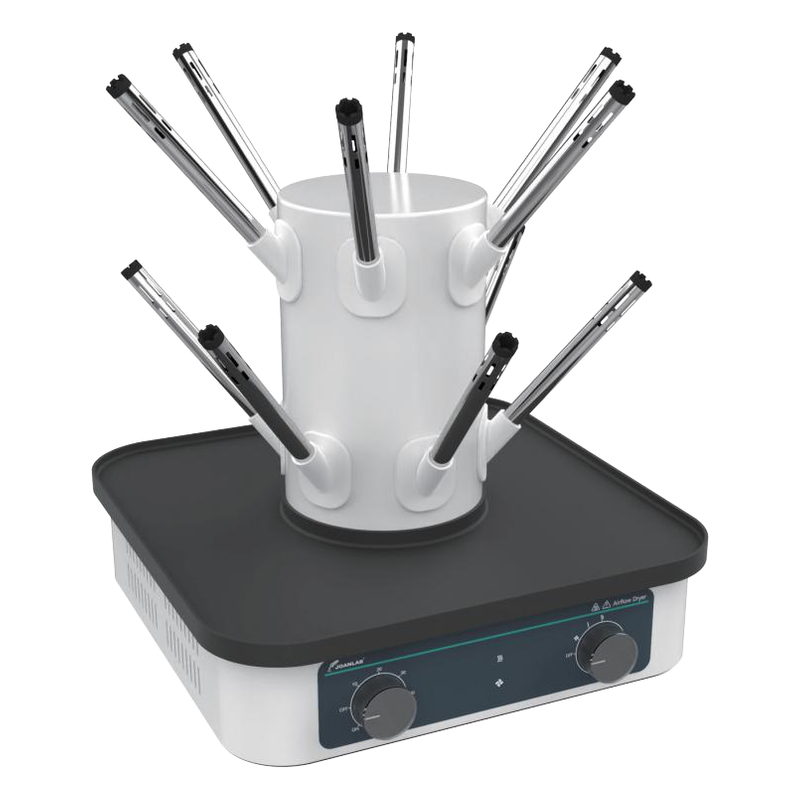 Ambient air or up to 85 °C
Heating in the laboratory is a problem of transfer, not of power. Between the heating element and whatever you want to heat there is a medium in the way, and that medium decides the uniformity and the error you are going to make.
A heating mantle delivers the heat by direct contact with the wall of the flask, and that is why each mantle corresponds to a particular flask volume. If the vessel is not its own, part of the element heats air instead of glass. The declared range is one of heating: the temperature of the liquid depends on the load and on the process.
A thermostatic bath puts water in between, and water has high thermal inertia: it takes time to get there and time to step aside, and it spreads the heat around everything submerged without requiring the vessel to fit anywhere in particular. In exchange it asks for maintenance, because it evaporates, and it brings a failure mode of its own: the tank left dry with the element switched on.
The question that orders the choice is what temperature the process works at. Six of the seven families on this page declare their maximum temperature at 100 °C or less; the only one that goes higher is the heating mantle family.
A process working above that mark —a distillation, or a reflux with a high-boiling solvent— rules out the baths, both water and dry, however much capacity is left over: that is where the mantle belongs. Below 100 °C the choice is no longer decided by temperature but by geometry: the mantle heats the wall of the glass in the volume it was made for, and the bath spreads the heat around any vessel that fits in the tank.
A dry bath replaces the water with a metal block with positions for a particular vessel format. The heat passes by conduction from the block, so a vessel that does not match that format is separated from it by air, and air insulates: the unit reaches the set point and the contents do not. Where the block is chosen, it is chosen by the format before the number of positions.
On the three dry-bath series on this page the block is not included and is quoted separately: without it the unit cannot be used, so the format has to be decided when ordering and not on delivery.
It does not heat a sample: it drives the water out of a piece of glassware by forcing air through ducts, at room temperature or heated. What speeds up the drying is not only the temperature, but the flow carrying the vapor away instead of letting it saturate inside. That is why it also works cold, which is what suits volumetric glassware: in a hot oven it can lose its calibration.
The vessel before the unit: volume and shape of the flask for a mantle; format and number of tubes per run for a dry bath. On the mantles, the capacity is stated when ordering alongside the code, which designates the configuration and not the size.
The working temperature and how long the run lasts. If the unit is going to be left switched on and unattended, it is worth asking in writing what protections the quoted version carries: not all the families declare the same ones.
The voltage and frequency at the connection point, and the bench space available.
View the full catalog · View autoclaves · View refrigerators · View stirrers and shakers · View pipetting and dispensing · View balances · View ultrasonic cleaning · View spectrophotometers · View vacuum pumps · View infrared sterilizers
Describe the equipment you are looking for and we will prepare a quote, whether or not it appears in our catalog.