
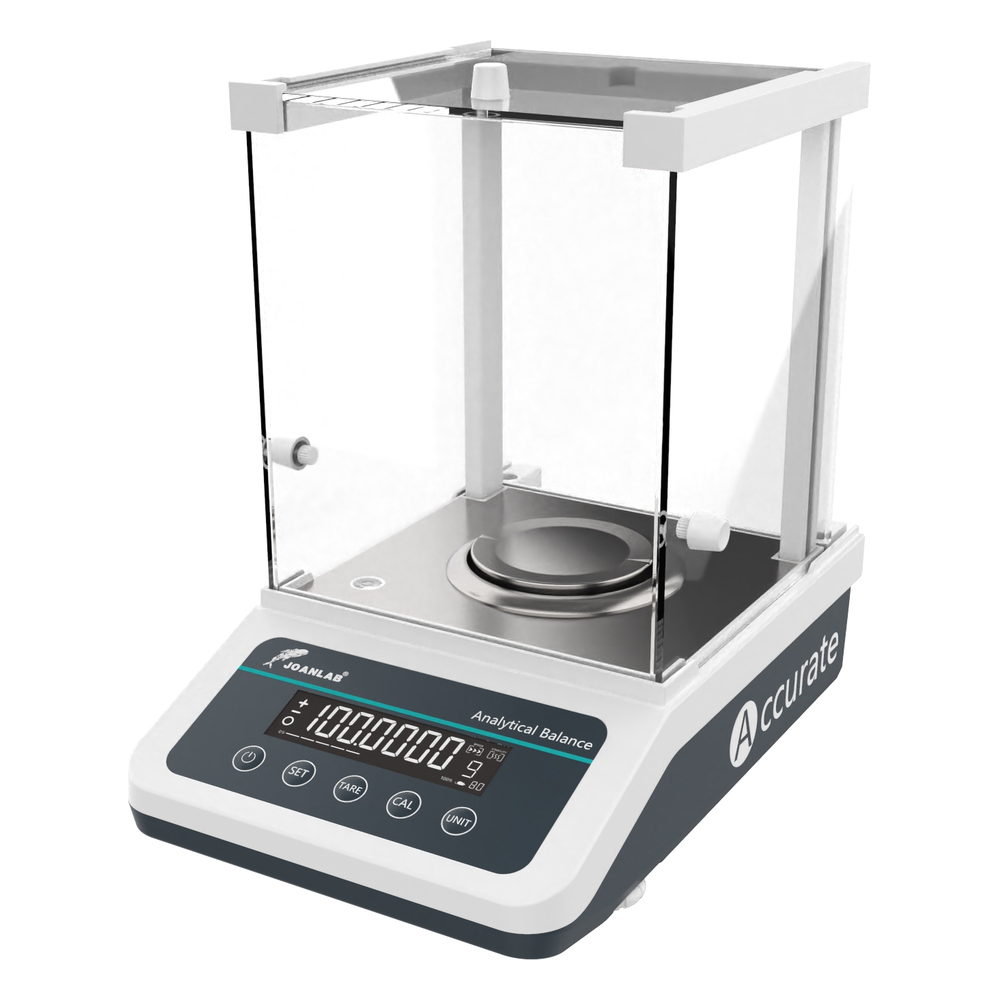
 Electromagnetic compensation
Analytical balances
JOANLAB analytical balance · FA series
FA1004 · FA1004N · FA1204 · FA1204N · FA2004 · FA2004N · FA2204 · FA2204N
- Capacity
- 100-220 g
- Readability
- 0.1 mg
5 families of laboratory balances from JOANLAB: analytical balances, precision balances, and moisture analyzers. Models, configuration and availability are confirmed in the quote.
5 product families
Electromagnetic compensation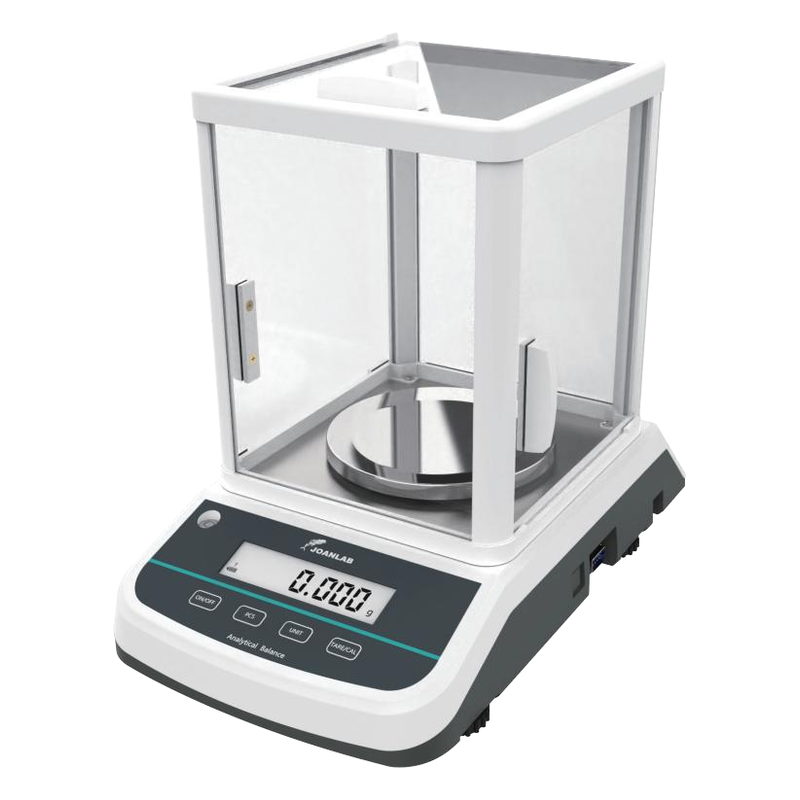 Dual display on the S version
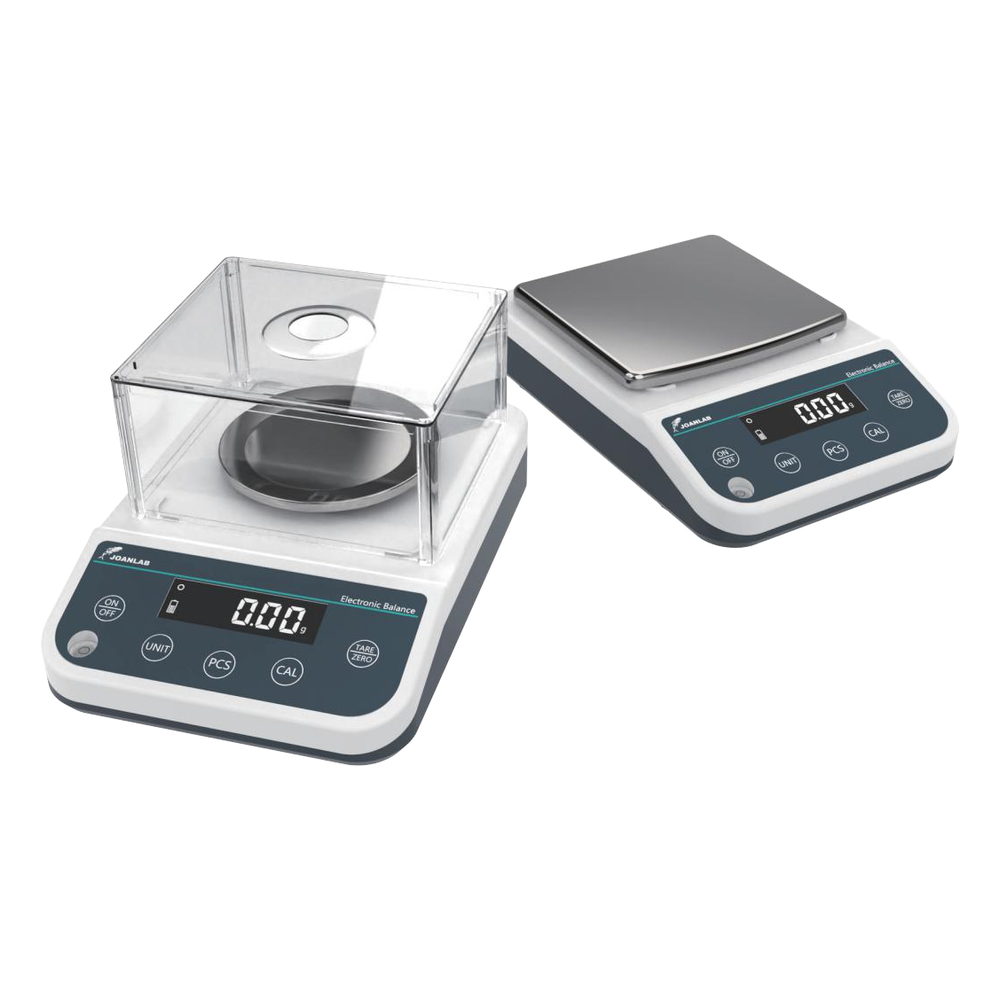 Nineteen configurations
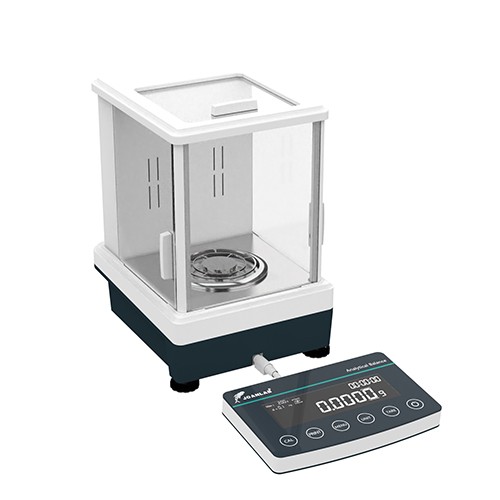 Switchable dual range
 5″ touchscreen
The error of a balance is expressed in units of mass and does not shrink when the sample shrinks: the deviation that is negligible on a large load can be an enormous fraction of a weighing of a few milligrams. Hence the most expensive mistake: choosing by the heaviest thing you are going to put on the pan. Maximum capacity only rules units out; the resolution is set by the smallest weighing.
Readability is the step in which the unit displays the result, not the error of the measurement: that is described by repeatability and linearity error, which the FA, FA-003 and CEB series declare separately on their datasheets; the JNB series and the MBA analyzer do not declare them and they have to be asked for. Between the finest and the coarsest readability on this page there are four orders of magnitude, from 0.01 mg to 0.1 g.
An analytical balance is built for the finest reading step and for small loads; a precision balance works with a coarser step and takes larger loads. No sensor delivers a fine step and a large range at the same time: resolution is paid for in capacity, so the same capacity can be offered with more than one readability.
When the step gets finer, the surroundings enter the measurement. A draft of air over the pan is a force, and an electrostatically charged vessel drags the reading. That is the reason the draft shield exists: it does not protect the unit, it isolates the air around the pan. If the model comes with one, readings are taken with it closed.
A balance does not measure mass: it measures force and compares it against a reference. The weight of a body depends on the acceleration of gravity at the place, which changes with latitude and altitude. That is why the adjustment is made where the unit is going to work, and repeated every time it changes location.
Internal calibration is carried out by the unit with a mass it holds inside; the external one you do yourself with a reference weight that somebody has to keep and apply. It is worth confirming in the quote which calibration corresponds to the model and whether it includes a weight.
An instrument that has just been switched on is not in thermal equilibrium either, and the zero drifts while it gets there. One of the five families on this page declares a warm-up time, of 30 to 60 minutes; on the other four it is worth asking.
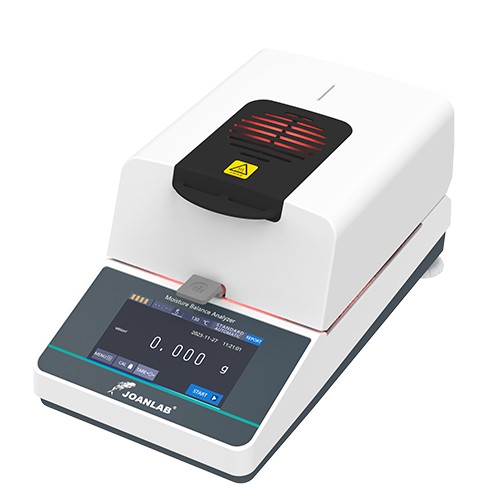
It is a balance with a heat source over the pan: it weighs the sample, heats it and follows the loss of mass. What it reports is not water but mass lost under a heating program, so it counts everything that volatilizes within that program and does not count water that stays bound.
The number describes the method as much as the sample: two results are only comparable if they share temperature, end criterion and sample mass, and it is worth writing the program down.
The smallest mass you are going to weigh and the largest, in that order: the first sets the readability, the second only rules models out. The size of the vessel that goes on the pan, not only that of the sample.
The site —a firm bench, free of vibration, away from doors and from the air conditioning—, the room temperature and the voltage available. And what has to come out of the unit: the FA, FA-003 and CEB series declare their interface —RS232, with USB optional or standard depending on the model—; the JNB series and the MBA analyzer do not declare data output, so it is worth asking about it before requesting a quote.
View the full catalog · View autoclaves · View refrigerators · View stirrers and shakers · View pipetting and dispensing · View heating equipment · View ultrasonic cleaning · View spectrophotometers · View vacuum pumps · View infrared sterilizers
Describe the equipment you are looking for and we will prepare a quote, whether or not it appears in our catalog.